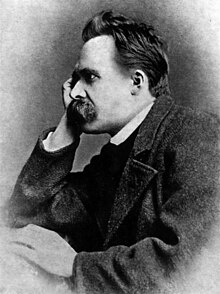
A few days ago, I stumbled upon a quote by Friedrich Nietzsche on Goodreads: “Everyone who has ever built anywhere a new heaven first found the power thereto in his own hell.” Those words instantly captured my attention, and I had no idea just how deeply they would resonate with my ongoing journey as an international student from Pakistan, navigating the challenges of homesickness, cultural shock, and adapting to a new academic and professional environment in the United States.
Ever since I left my homeland, homesickness has been a constant companion, a nagging reminder of the sights, sounds, and connections that defined my sense of belonging in Pakistan. It’s a feeling that often overwhelms me, like a shadow cast over my daily life. But Nietzsche’s quote brought forth a powerful realization. It made me reflect on how, within the depths of my own personal “hell,” I might find the strength to build something remarkable. This perspective has the potential to transform my homesickness from a source of despair into a catalyst for growth and resilience.
As I navigate this longing and attempt to create a new sense of home in the United States, I’m reminded of research conducted by Thurber and Walton (2012). They highlighted that homesickness is a common experience among university students and is an expected part of the adjustment process. Recognizing homesickness as a natural part of the journey allows me to not only acknowledge it but also work through it, slowly discovering a sense of belonging in my new environment. Additionally, Zhang and Goodson (2011) conducted a systematic review that identified predictors of international students’ psychosocial adjustment to life in the United States, providing valuable insights into strategies for managing homesickness.
As I immerse myself in American culture, cultural shock continues to shape my experiences. The customs, traditions, and ways of life here are drastically different from what I’ve known all my life. This disorientation and challenge of adaptation can’t be conquered overnight, especially considering the time I’ve been here so far, which is relatively short. Yet, Nietzsche’s words still resonate with me. I’m gradually learning to embrace the unknown, appreciate diversity, and bridge the gap between my roots and this foreign land.
Engaging with the local culture, forming connections with people from various backgrounds, and seeking intercultural experiences have become my stepping stones in navigating through cultural shock. I understand that this process will take time and continuous effort as I strive to expand my worldview and embrace the beauty of diversity. Here, the work of Ward and Kennedy (1999) is insightful. They conducted research on the measurement of sociocultural adaptation and emphasized the importance of actively engaging with the local culture for successful adjustment. Their work provides valuable insights into strategies for managing cultural shock and fostering a sense of belonging in a new cultural environment. Additionally, Asgary and Liang (2017) conducted a study on the acculturation experiences of Asian international students, shedding light on the challenges and coping mechanisms that individuals may encounter during the process of cultural adaptation.
Academically, the transition to a new educational environment has presented its own set of trials. Different teaching styles, academic expectations, and language requirements push me out of my comfort zone. However, Nietzsche’s profound insight encourages me to find the power within my own “hell” of academic challenges. I’m actively seeking support from academic resources, connecting with mentors and student communities, and dedicating myself to continuous growth.
I’m gradually finding my footing in this new academic landscape, but it is an ongoing journey. For instance, I’ve come across research by Chen and Li (2019) that emphasizes the role of English language proficiency in the adjustment of Chinese international students in U.S. higher education. This study has provided me with valuable insights into the challenges I face regarding language and offers strategies for enhancing language proficiency and academic success. Additionally, Smith and Khawaja (2011) conducted a review of the acculturation experiences of international students, highlighting the impact of sociocultural factors on their adjustment. Their research sheds light on the complexities of academic adaptation and provides valuable recommendations for supporting international students in their academic journey.
Simultaneously, the professional realm presents its own set of obstacles. Administrative tasks, work cultures, and career expectations differ significantly from what I have known back home. Nietzsche’s words continue to echo in my mind, reminding me that the power to create my own “heaven” in this foreign professional landscape lies within my reach. While it would be unrealistic to claim immediate success in overcoming these challenges, I am actively embracing the hurdles, seeking networking opportunities, and leveraging my unique cultural perspectives to stand out.
In my quest to navigate the professional landscape, I’ve found the work of Helsper and Severiens (2019) to be incredibly insightful. They emphasize the importance of networking and social support in facilitating the integration of international students into the professional realm. Their study provides insights into the challenges faced by international students in terms of career development and offers strategies for building professional networks and navigating the job market. Furthermore, Suutari and Brewster (2001) conducted research on the career capital and acculturation experiences of expatriate managers, which offers valuable insights into the professional adaptation of individuals in a foreign work environment.
Friedrich Nietzsche’s quote discovered just a few days ago, has sparked a profound resonance within me. It serves as a guiding principle in my ongoing journey as an international student. His words have ignited a process of self-reflection and growth. The challenges I face align with the experiences of other international students, as supported by the research conducted by numerous scholars highlighting the significance of networking, social support, and professional adaptation for international students. Drawing upon these academic references and my personal experiences, I continue to navigate the complexities of being an international student, with the aim of building my own “heaven” amidst the challenges and complexities of this transformative experience.
References:
Asgary, R., & Liang, L. (2017). Acculturation experiences of Asian international students: The role of intercultural communication. Journal of International Students, 7(4), 995-1015.
Chen, Y., & Li, L. (2019). English language proficiency and acculturation: The adjustment of Chinese international students in U.S. higher education. Journal of International Students, 9(4), 1247-1266.
Helsper, W. J., & Severiens, S. E. (2019). Facilitating the transition to work: Learning from the acculturation experiences of international students. Higher Education, 78(2), 297-314.
Smith, R. A., & Khawaja, N. G. (2011). A review of the acculturation experiences of international students. International Journal of Intercultural Relations, 35(6), 699-713.
Thurber, C. A., & Walton, E. A. (2012). Homesickness and adjustment in university students. Journal of American College Health, 60(5), 415-419.
Ward, C., & Kennedy, A. (1999). The measurement of sociocultural adaptation. International Journal of Intercultural Relations, 23(4), 659-677.
Zhang, J., & Goodson, P. (2011). Predictors of international students’ psychosocial adjustment to life in the United States: A systematic review. International Journal of Intercultural Relations, 35(2), 139-162.
 Itrat Sultan
Leave a comment